

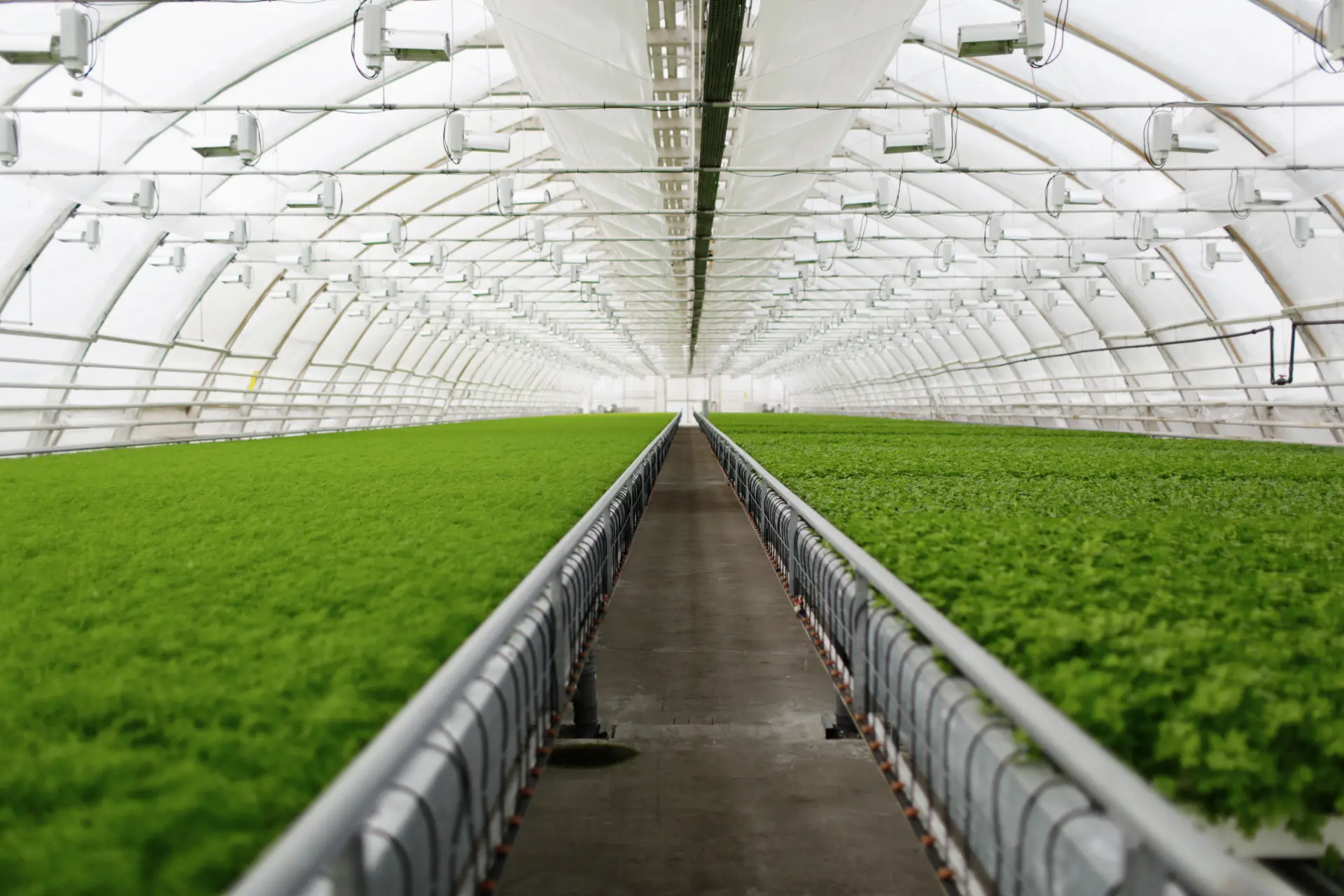

Anti-Thrips Netting
Physical barrier against thrips (Frankliniella occidentalis) and TSWV virus in greenhouses. Ultra-fine aperture exclusion netting for intensive horticulture. Made in Spain.

EU
How HDPE anti-thrips netting works in the greenhouse
Textil Villa de Pego's anti-thrips netting is an HDPE monofilament fabric available in several densities (10×10, 16×10 and 21×11 threads/cm) with apertures from 0.24 to 0.76 mm. The densest variants physically prevent adult thrips and nymphs from passing through, eliminating the main entry route for TSWV into the crop.
Made with Ø 0.22–0.24 mm monofilament thread, the netting maintains adequate light transmission (70-75%) and allows sufficient ventilation for the protected crop. UV stabilised for maximum durability under intense solar exposure.
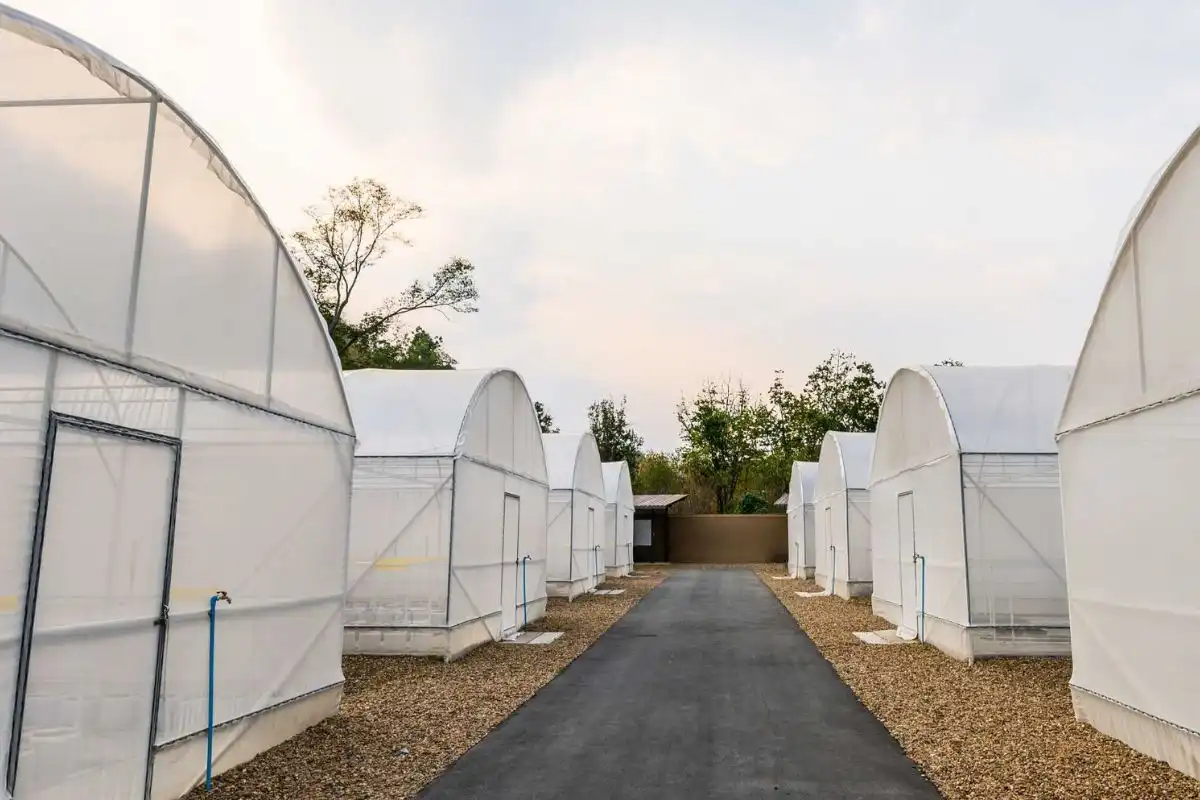
Advantages of anti-thrips netting for greenhouses
Total thrips exclusion
0.3 mm aperture that blocks 100% of adult thrips and nymphs. An impassable physical barrier for Frankliniella occidentalis and Thrips tabaci.
TSWV virus prevention
By excluding the vector thrips, it prevents transmission of tomato spotted wilt virus (TSWV) and other tospoviruses.
Multi-pest protection
The 0.3 mm aperture also excludes whitefly (Bemisia tabaci), aphids and leaf miners.
Adequate light transmission
Light transmission of 70-75%. Compatible with horticultural crops with high light demand.
Reduces pesticide use
Physical exclusion drastically reduces the need for chemical treatments. Compatible with organic and integrated production.
Custom manufacturing
Made for windows, doors and full greenhouse coverings. Perimeter reinforcements and zips. Manufacturer price.
Ecological alternative to chemical treatments — certified organic farming compatible
Physical barrier that eliminates the need for insecticides. Mechanical control method compatible with organic farming certifications and zero-residue protocols.
Technical specifications
| Property | Value |
|---|---|
| Material | HDPE monofilament (thread Ø 0.22–0.24 mm) |
| Weight | 96–145 g/m² (depending on density) ±5% |
| Mesh aperture | 0.24–0.76 mm (depending on variant) ±5% |
| Thread density | Desde 10×10 hasta 21×10,5 hilos/cm (50 mesh) |
| UV stabilisation | Sí, 700 kLy (alta resistencia UV) |
| Light transmission | 70–75% |
| Vida útil estimada | Long service life — please enquire based on geographic zone |
Values shown are indicative and subject to manufacturing tolerances (±5% dimensional, ±10% mechanical). Data does not constitute contractual specifications.
Available colors
Anti-thrips netting for greenhouses: crops protected against thrips
Tomato
Main crop affected by thrips and TSWV. Anti-thrips netting is essential in tomato greenhouses in warm regions.
Pepper
Pepper extremely sensitive to TSWV transmitted by Frankliniella occidentalis. Losses of 20-80% without protection.
Cucumber and courgette
Cucurbits under cover susceptible to thrips and viruses. Anti-thrips netting helps reduce chemical treatments.
Fresa
Frankliniella occidentalis causes direct damage to strawberry flowers and fruit. Physical exclusion prevents deformation and quality losses.
Ornamental flowers
High-value flower crops (gerbera, chrysanthemum, rose) where thrips cause cosmetic damage and transmit INSV.
Medicinal cannabis
Medicinal cannabis crops in greenhouses require total pest exclusion to meet plant-health standards.
Thrips: tiny but devastating
Thrips (Frankliniella occidentalis, Thrips tabaci) measure just 1-2 mm. Their tiny size lets them pass through conventional insect netting. They are vectors of tomato spotted wilt virus (TSWV) and Impatiens necrotic spot virus (INSV), which cause total losses in horticultural crops.
In greenhouses in warm regions, thrips cause annual losses of millions of euros. Chemical treatments are increasingly ineffective due to developing resistance (spinosad resistance documented since 2014), and European regulations restrict the active substances available.
A standard insect net (aperture >0.5 mm) does NOT stop thrips. An aperture of 0.3 mm or smaller is needed.
Frequently asked questions about agricultural anti-thrips netting
What is anti-thrips netting?
Anti-thrips netting is an HDPE monofilament fabric with apertures of 0.24-0.76 mm designed to exclude thrips (1-2 mm). Standard insect netting (0.5-0.8 mm) does not stop thrips. Anti-thrips netting is essential to prevent TSWV virus in greenhouses.
What density of anti-thrips netting do I need?
For total thrips exclusion: 21×11 threads/cm (0.24 mm aperture). For thrips and whitefly: 16×10 threads/cm (0.35 mm aperture). The density is chosen according to the target pest and the greenhouse's ventilation needs.
Does anti-thrips netting reduce ventilation?
Yes. Anti-thrips netting reduces airflow more than a standard net. This is offset with a larger window area (a 25-30% increase) or forced ventilation. Our technical team will advise you on the optimal balance.
Does anti-thrips netting work against whitefly?
Yes. The densest variants (21×11 threads/cm, 0.24 mm aperture) exclude thrips, whitefly (Bemisia tabaci), aphids and leaf miners. It is the highest-exclusion netting in the Textil Villa de Pego catalogue.
Does anti-thrips netting affect the greenhouse temperature?
Anti-thrips netting can slightly raise the internal temperature by reducing airflow. This is mitigated with forced ventilation or a larger window area. Light transmission is 70-75%, adequate for intensive horticulture.
Let’s talk about your project
Receive a personalised quote within 24 hours. No obligation.
WWW.TEXTILVPEGO.COM
FABRICANTES DESDE 1949