

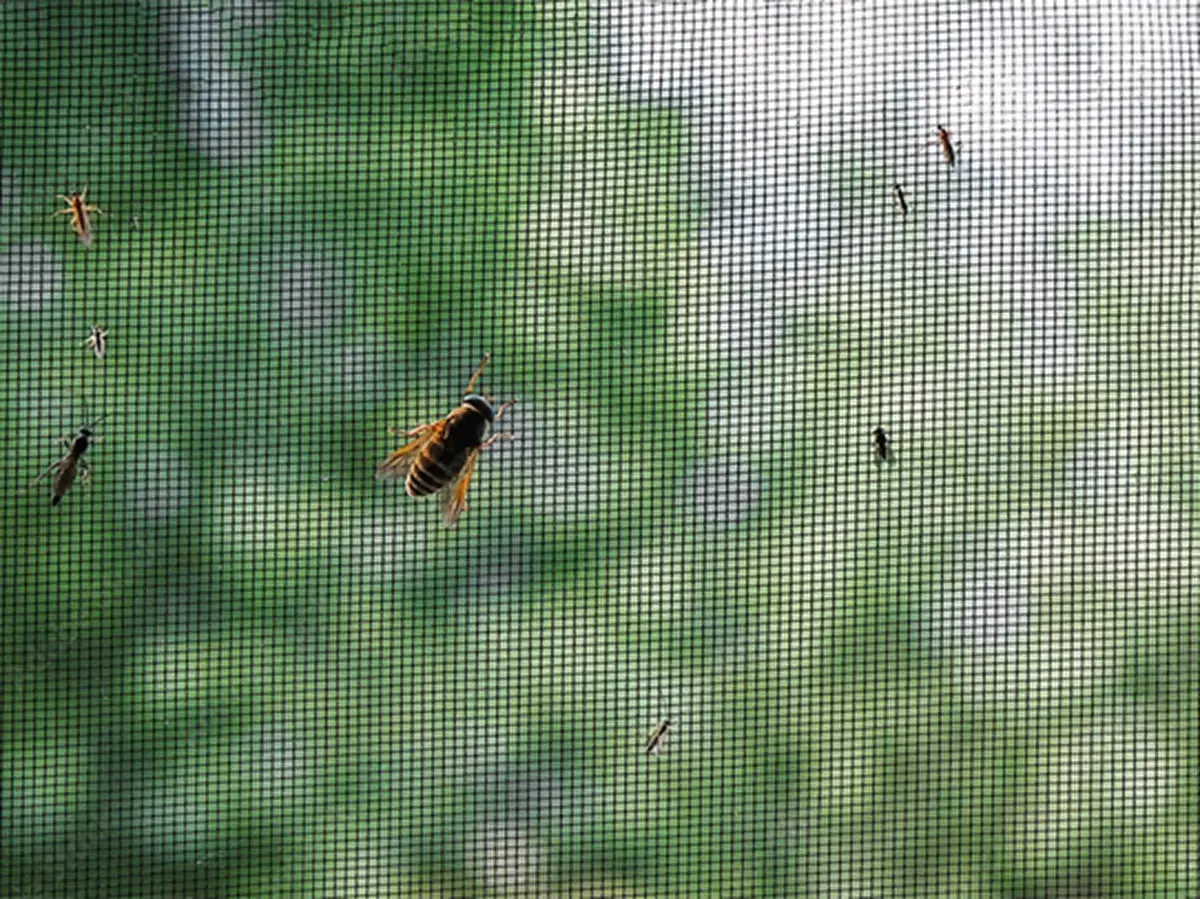

Agricultural Insect Screen
Physical barrier against Tuta absoluta, whitefly and Drosophila suzukii in the greenhouse. No pesticides, compatible with organic farming. Insect mesh netting made in Spain.
EU
How HDPE insect mesh netting works for greenhouses and protected crops
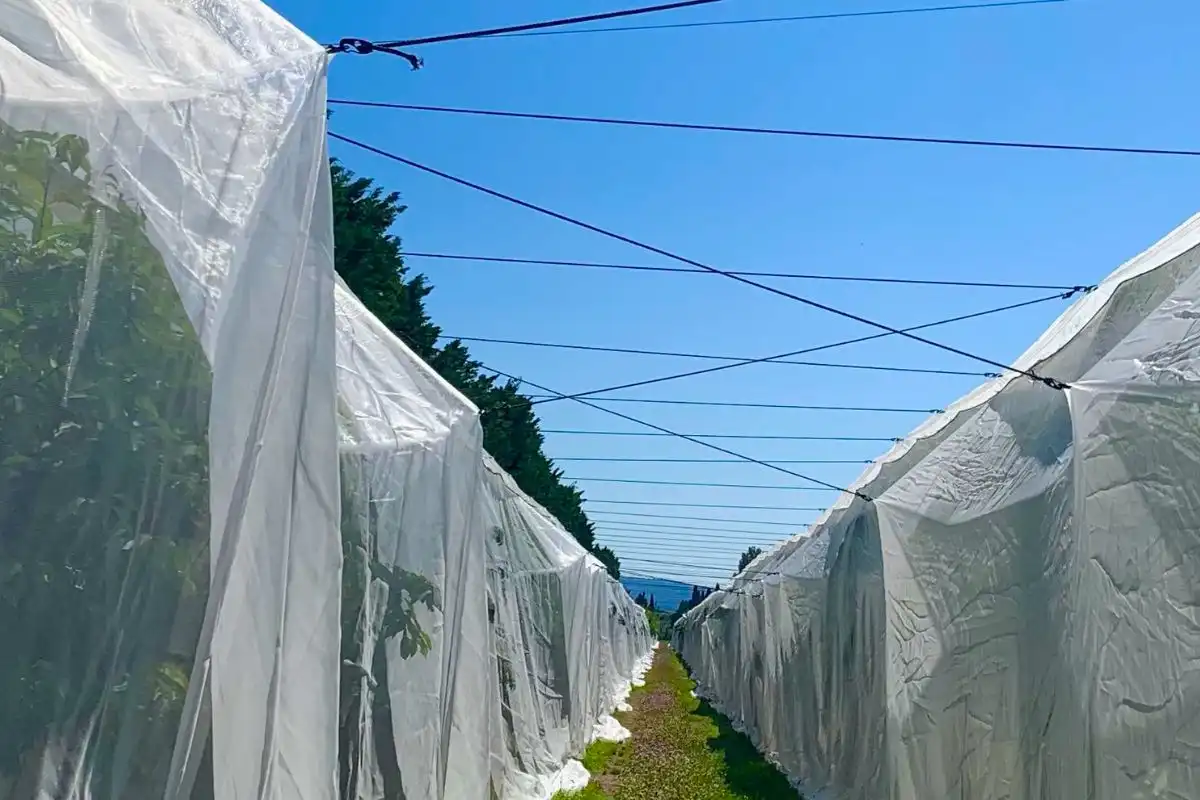
Textil Villa de Pego insect mesh netting is an HDPE monofilament fabric with a calibrated mesh opening (0.5 to 0.8 mm). It physically prevents medium and large insects from entering the greenhouse or tunnel without the need for chemical treatments.
Available in densities of 6×6 and 6×9 threads/cm for the exclusion of Tuta absoluta, moths, whitefly and Drosophila suzukii. Compatible with natural and forced ventilation. For the exclusion of thrips and aphids, Textil Villa de Pego manufactures anti-thrips netting with densities of up to 21×11 threads/cm and openings from 0.24 mm.
Advantages of insect mesh netting for greenhouses and protected crops
Selective exclusion
Mesh opening calibrated to exclude insects by size: Tuta absoluta (0.6 mm), whitefly, leaf miners and moths (0.8 mm). For thrips and aphids, see our anti-thrips netting with an ultra-fine opening.
Reduced pesticide use
Physical exclusion reduces or eliminates the need for chemical treatments. Compatible with organic production.
High light transmission
Light transmission of 70-90% depending on density and colour.
Adequate ventilation
Allows enough ventilation to avoid excess temperature and humidity.
Barrier against viruses
Al excluir los insectos vectores, previene la transmisión de virus como TSWV, TYLCV y CMV.
Made to measure
Custom-made for greenhouse or tunnel windows, doors and coverings.
Temperature regulation
The mesh helps stabilise internal greenhouse temperature, reducing day-night thermal fluctuations that stress crops.
Ecological alternative to chemical treatments — certified organic farming compatible
Physical barrier that eliminates the need for insecticides. Mechanical control method compatible with organic farming certifications and zero-residue protocols.
Technical specifications
| Property | Value |
|---|---|
| Material | HDPE monofilament |
| Weight | 50–120 g/m² ±5% |
| Mesh size | 0,24 mm (anti-trips) a 0,8 mm (anti-lepidópteros) ±5% |
| Thread density | 6×6 a 21×10,5 hilos/cm |
| UV stabilisation | Sí, tratamiento anti-UV |
| Light transmission | 70–90% |
| Vida útil estimada | Long service life — enquire based on geographic area |
Values shown are indicative and subject to manufacturing tolerances (±5% dimensional, ±10% mechanical). Data does not constitute contractual specifications.
Available colors
Insect mesh netting: crops protected against greenhouse pests
Tomato
Protection against Tuta absoluta and whitefly. Essential in intensive production greenhouses.
Pepper
Exclusion of moths and whitefly in greenhouses. For thrips exclusion (vector of TSWV), see our anti-thrips netting.
Citrus
Protection against the African citrus psyllid (Trioza erytreae), vector of HLB.
Stone fruit
Exclusión de Drosophila suzukii en cerezo, ciruela y melocotón.
Berries
Blueberry, raspberry and strawberry susceptible to Drosophila suzukii.
Cucumber and courgette
Protection against whitefly and moths. Compatible with natural pollination.
Medicinal cannabis
Medicinal cannabis crops in greenhouses require total insect exclusion to meet phytosanitary and quality standards.
Pests that ravage crops and force the use of pesticides
Tuta absoluta can destroy 100% of a tomato harvest in a few weeks. Drosophila suzukii devours cherry and berry production. Whitefly transmits viruses (TYLCV) and moths cause direct damage to fruit and leaves.
Chemical control is increasingly expensive, less effective because of pest resistance, and subject to growing restrictions under European regulations.
Physical exclusion with insect mesh netting reduces or eliminates the need for chemical treatments.
Frequently asked questions about agricultural insect mesh netting
Which type of insect mesh netting is best for greenhouses?
Anti-trips: 0,27 mm. Antiáfidos: 0,35 mm. Anti-Tuta: 0,6 mm. Anti-lepidópteros: 0,8 mm.
Does agricultural insect mesh netting reduce greenhouse ventilation?
Yes, fine-opening nets reduce airflow in proportion to their density. This is offset with a larger window area (25-30% more) or forced ventilation. Our technical team advises on the optimum balance for your greenhouse.
Fibreglass insect netting vs HDPE plastic?
For professional agricultural use, HDPE monofilament netting is superior to fibreglass: greater UV resistance, greater durability with UV stabilisation, resistance to plant protection products and flexibility for made-to-measure manufacturing. Fibreglass is more suited to domestic use.
How do you install insect mesh netting in a greenhouse?
The netting is installed on greenhouse windows, doors and coverings. It is fixed to the frame with aluminium profiles, clips or staples. Textil Villa de Pego manufactures made to measure for the exact dimensions of your openings.
Does insect mesh netting let light through?
Yes. Light transmission is 70-90% depending on thread density. Nets with a larger opening (anti-moth) transmit more light. Fine HDPE monofilament minimises the shade cast over the crop.
Let’s talk about your project
Receive a personalised quote within 24 hours. No obligation.
WWW.TEXTILVPEGO.COM
FABRICANTES DESDE 1949