


ANTIDROSOPHILA
Anti-Drosophila Suzukii Netting
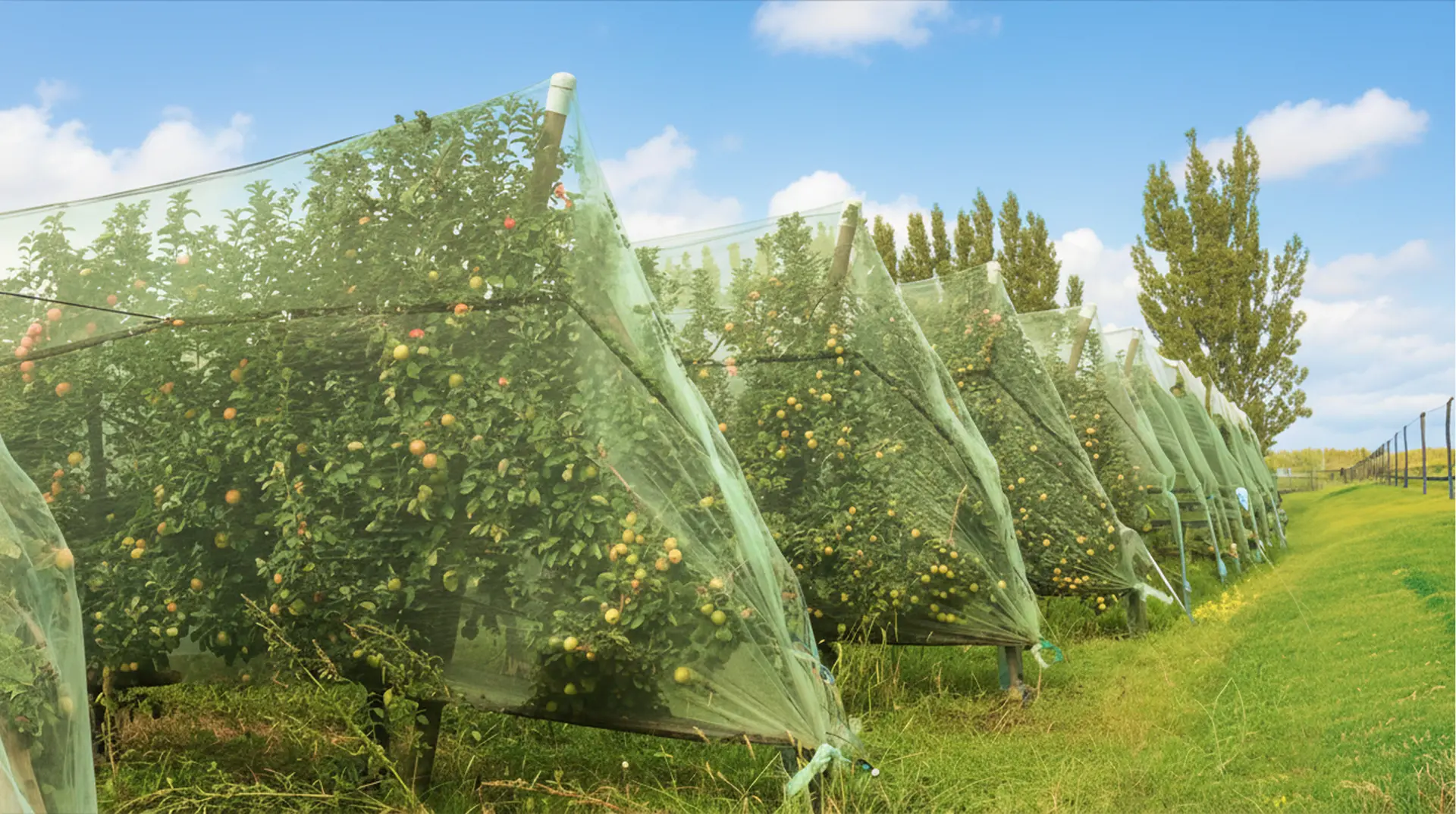
Physically exclude Drosophila suzukii from your cherry, berries and table grapes without pesticides. Compatible with natural pollination and organic farming. Made in Spain.

EU
How to protect cherry trees from drosophila suzukii with exclusion netting
Textil Villa de Pego anti-Drosophila suzukii netting is an HDPE fabric with an opening of less than 1 mm (0.8 × 0.8 mm typical), specifically calibrated to prevent the adult SWD from passing through (body of 2-3 mm, but able to cross openings of 1 mm). Research from Wageningen University confirms that openings smaller than 0.9 mm block 100% of adult SWD.
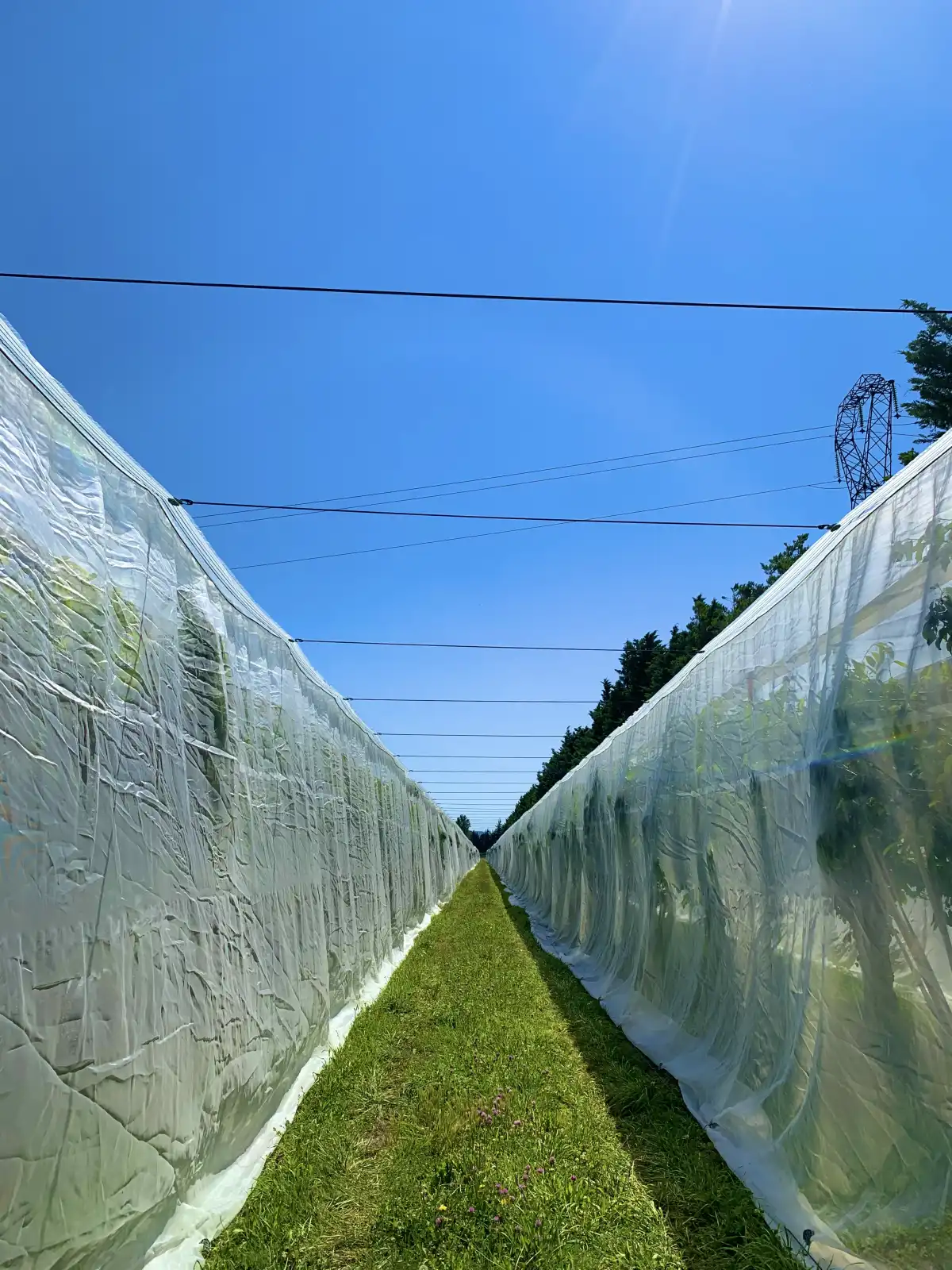
Unlike anti-thrips netting, the anti-SWD netting allows greater ventilation and the passage of pollinators. Available for installation over tunnel-type structures, single-row covers and full tree covering. UV stabilisation for multiple seasons.
Advantages of the exclusion netting against Drosophila suzukii
Total SWD exclusion
Opening <1 mm that blocks 100% of adult Drosophila suzukii. Research validated by Wageningen University.
Protects healthy fruit
Prevents the female SWD from laying eggs in cherries, berries and grapes. No larvae, no damage, no loss.
Allows pollination
The 0.8 mm opening allows bees and other pollinators through, unlike anti-thrips netting.
Good ventilation
Greater airflow than finer-mesh nets. Reduces the risk of fungal diseases from excess humidity.
UV stabilisation
Anti-UV treatment for maximum durability under direct sun exposure.
Made to measure
Custom-made for tunnels, single-row structures, covering of individual trees and full enclosures. Manufacturer prices.
Ecological alternative to chemical treatments — certified organic farming compatible
Physical barrier that eliminates the need for insecticides. Mechanical control method compatible with organic farming certifications and zero-residue protocols.
Technical specifications
| Property | Value |
|---|---|
| Material | UV-stabilised HDPE monofilament |
| Weight | 55–80 g/m² ±5% |
| Mesh size | 0.8 × 0.8 mm (≤1.0 mm in both directions) ±5% |
| UV stabilisation | UV-stabilised for maximum outdoor durability |
| Light transmission | 85–90% |
| Vida útil estimada | Long service life — enquire based on geographic area |
| Available widths | 2 to 12 m (made to measure) |
Values shown are indicative and subject to manufacturing tolerances (±5% dimensional, ±10% mechanical). Data does not constitute contractual specifications.
Drosophila suzukii netting: crops protected against SWD
Cherry
The crop most affected by SWD. Losses of up to 80% without protection. Exclusion netting is the most effective measure. Can be combined with rain cover netting and anti-hail netting for complete cherry protection.
Berries (strawberry, raspberry, blackberry)
Raspberries, strawberries and blackberries are highly vulnerable. The netting is installed over existing berry tunnels and structures.
Table grape
Table grape is a growing SWD target. The netting protects the bunches without affecting ripening.
Fig
The fig is extremely susceptible to Drosophila suzukii. Exclusion netting is the only viable protection on ripe figs.
Peach and nectarine
Thin-skinned stone fruit, especially nectarine, is increasingly affected by SWD in the final ripening stages.
Blueberry
Blueberry is a high-value crop especially vulnerable to SWD. Physical exclusion protects profitability.
Kiwi
Kiwi (especially baby kiwi or kiwiberry varieties) is a documented host of Drosophila suzukii. Exclusion netting protects the fruit during ripening.
Plum
Thin-skinned plum is an SWD target during the final ripening stages. Exclusion netting prevents egg-laying in healthy fruit.
Drosophila suzukii: the fly that attacks healthy fruit
Unlike the common fruit fly, which only attacks decomposing fruit, Drosophila suzukii (SWD) pierces the skin of healthy fruit with its serrated ovipositor and lays eggs in cherries, raspberries, blueberries and grapes BEFORE harvest. The larvae develop inside the fruit, causing it to collapse.
First detected in Europe in 2008, SWD has spread rapidly to every fruit-growing area. Losses in cherry can exceed 80% of production without protection. Chemical treatments have limited efficacy because the larvae develop protected inside the fruit.
Insecticides cannot reach the larvae inside the fruit. Only physical exclusion prevents Drosophila suzukii from laying its eggs.
Frequently asked questions about anti-Drosophila suzukii netting
What is drosophila suzukii?
Drosophila suzukii (spotted wing drosophila, or SWD) is an invasive pest that attacks healthy fruit before harvest, unlike the common fruit fly. Present in Europe since 2008, it causes losses of up to 80% in cherry without protection.
How do you protect cherry trees from Drosophila suzukii?
Physical exclusion with netting of less than 1 mm mesh is the most effective defence. It is installed over the crop structure (tunnel, single-row, full covering) before the fruit begins to ripen (colour change). Compatible with monitoring traps and biological control.
Drosophila suzukii netting: what mesh density do I need?
The mesh opening must be less than 1 mm in both directions (0.8×0.8 mm typical). Wageningen University establishes that mesh ≤0.9 mm blocks 100% of adult SWD. A larger opening allows better ventilation and the passage of pollinators.
Does drosophila netting affect pollination?
Not significantly. The 0.8 mm opening allows honeybees and most pollinators through, unlike anti-thrips netting (0.24 mm). It is installed after flowering in cherry.
When should you put drosophila netting on cherry trees?
Sí. La exclusión física es compatible con trampas de monitoreo, tratamientos fitosanitarios de refuerzo y control biológico. Es la base de una estrategia de manejo integrado de plagas (MIP).
Let’s talk about your project
Receive a personalised quote within 24 hours. No obligation.
WWW.TEXTILVPEGO.COM
FABRICANTES DESDE 1949