

CORTAVIENTOS
Windbreak Netting
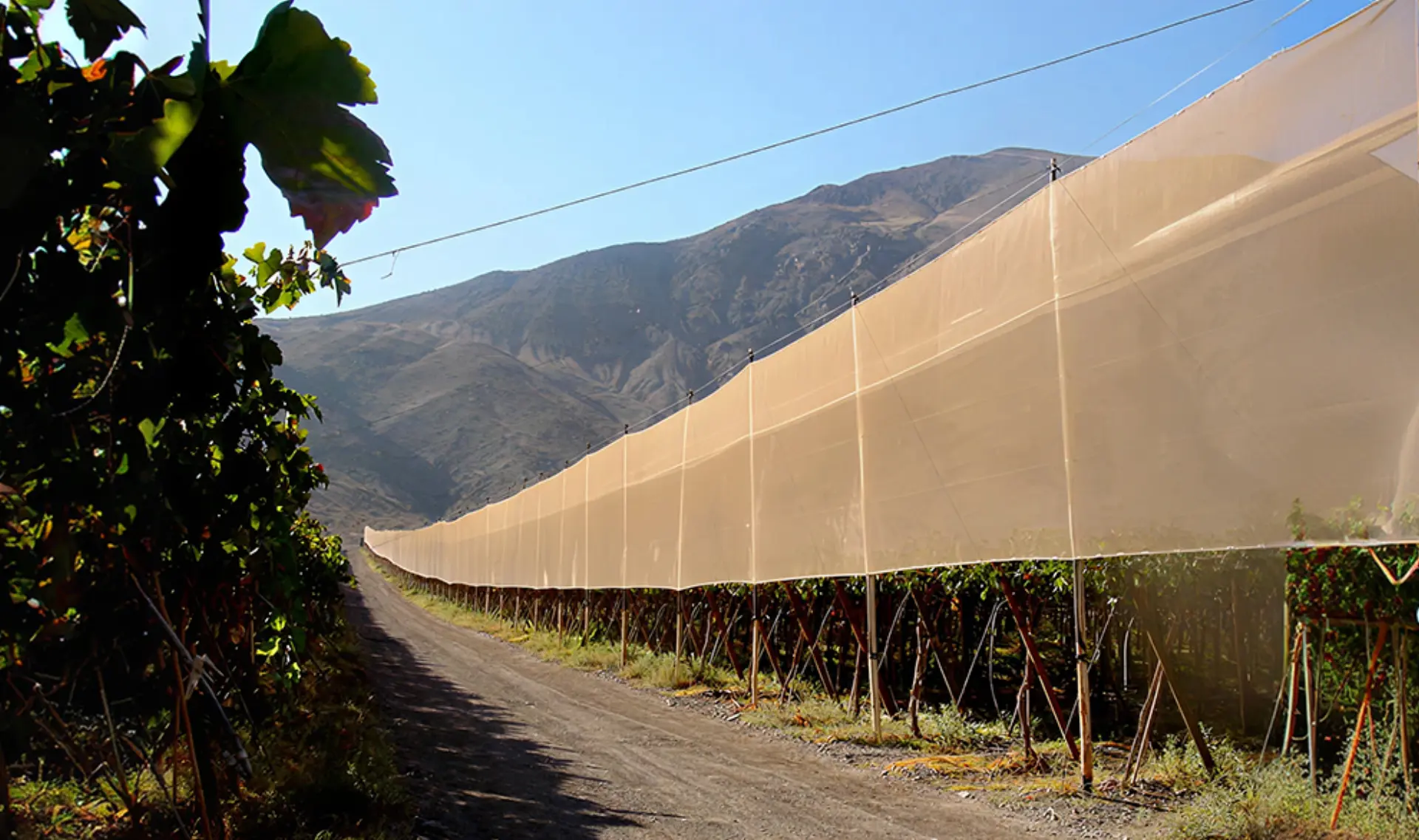
Reduce wind speed by between 50% and 70% to protect banana, avocado, citrus and intensive horticulture. HDPE windbreak netting custom-made in Spain.
EU
How HDPE windbreak netting works for wind protection of crops
Textil Villa de Pego windbreak netting is a leno-woven HDPE fabric with calibrated porosity (30-50%) that reduces wind speed by 50% to 70% without creating turbulence. A leading manufacturer with over 75 years of experience in crop protection.
Available in various densities according to wind intensity and the crop to be protected. Custom heights and widths thanks to our in-house manufacturing, with perimeter reinforcements. Stock available in standard sizes plus made-to-order production. Manufacturer prices with fast delivery throughout Spain via our own fleet. Export to any country.
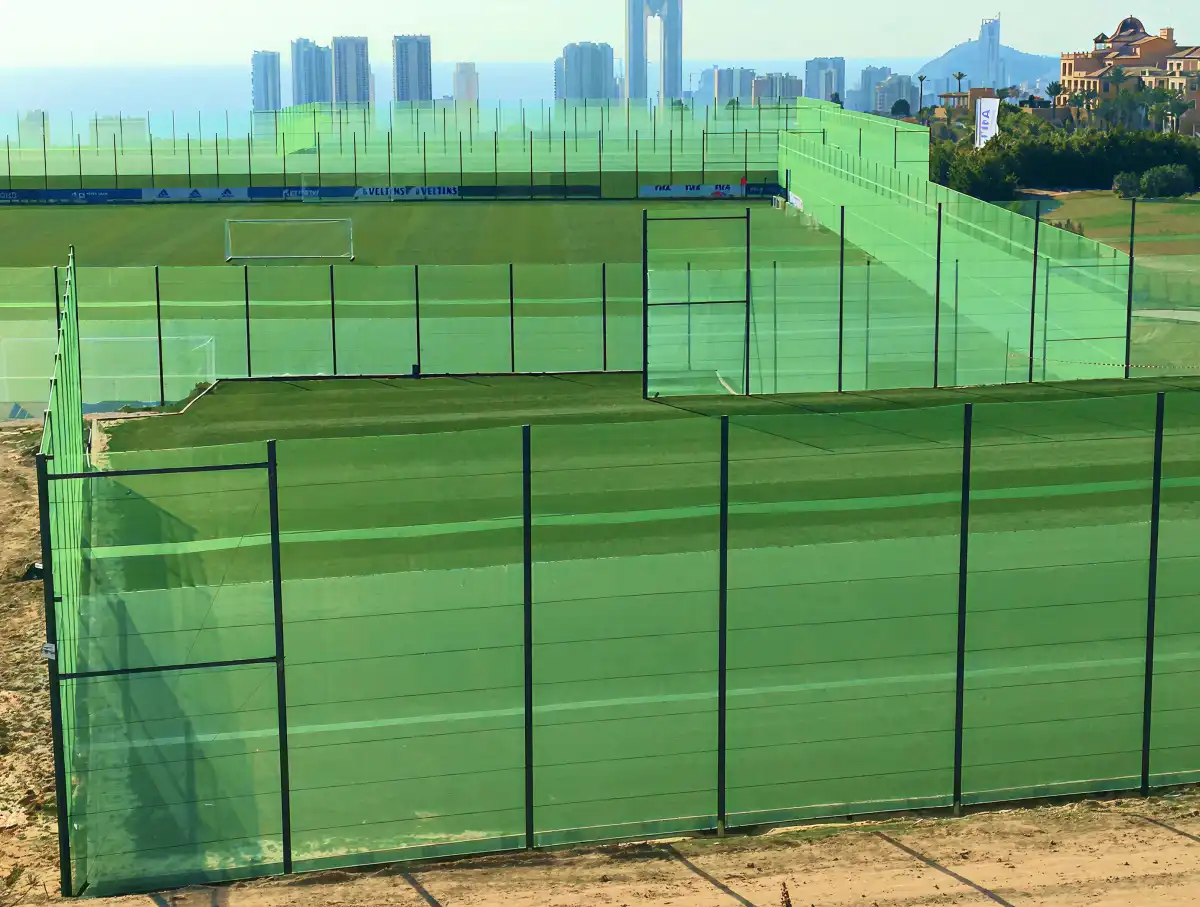
Advantages of HDPE agricultural windbreak netting
50-70% reduction
Wind speed reduction of between 50% and 70%, depending on the mesh density.
No turbulence
Unlike solid barriers, the net's calibrated porosity eliminates turbulence on the leeward side.
Reduces evapotranspiration
By reducing wind speed, it lowers evapotranspiration and the crop's water stress.
Mechanical protection
Prevents wind-caused flower and fruit drop, branch breakage and damage to structures.
Made-to-measure dimensions
We manufacture to any dimension thanks to our in-house finishing. Perimeter reinforcements and hems included.
Custom manufacturing
Made to your dimensions with perimeter reinforcements and hems. Spanish manufacturer, manufacturer price.
Ideal for organic farming
100% physical protection with no chemical residues. Compatible with certified organic farming operations and integrated production protocols.
Technical specifications
| Property | Value |
|---|---|
| Material | Leno-woven HDPE / monofilament-raffia |
| Wind reduction | 50–70% (depending on mesh density) |
| Weight | 80–150 g/m² ±5% |
| UV stabilisation | Sí, tratamiento anti-UV |
| Vida útil estimada | Long service life — enquire based on geographic area |
| Available heights | Made to measure (in-house manufacturing) |
| Colours | Green, black, white |
Values shown are indicative and subject to manufacturing tolerances (±5% dimensional, ±10% mechanical). Data does not constitute contractual specifications.
View full technical datasheet
Available colors
How to install windbreak netting
General recommendations for an effective installation. Every project is different — contact us for tailored advice for your crop and location.
Planning and posts
Set wooden, steel or concrete posts (Ø 8-10 cm) every 3 m for heights up to 2.5 m, or every 2 m for heights above 3 m. End posts should be angled or braced with anchor guys.
Support cables
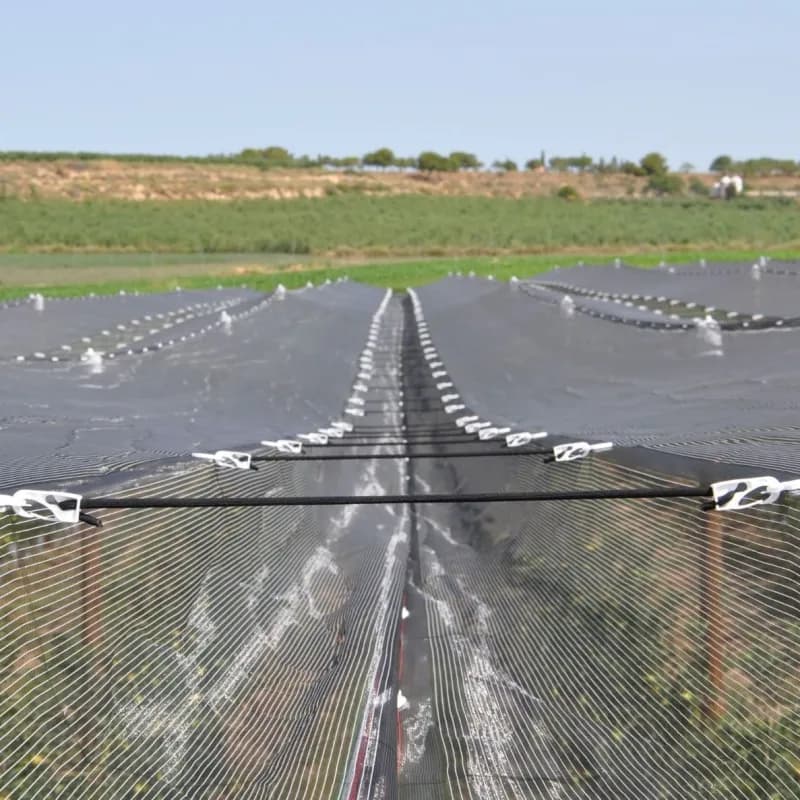
Run galvanised steel cable (Ø 4 mm) or Agropet® PET monofilament horizontally on the windward side, spaced every 40-50 cm vertically. Agropet® does not rust, weighs 5 times less than steel, holds its tension permanently and does not cut into the fabric, unlike galvanised wire.
Agropet® and twineFixing the netting
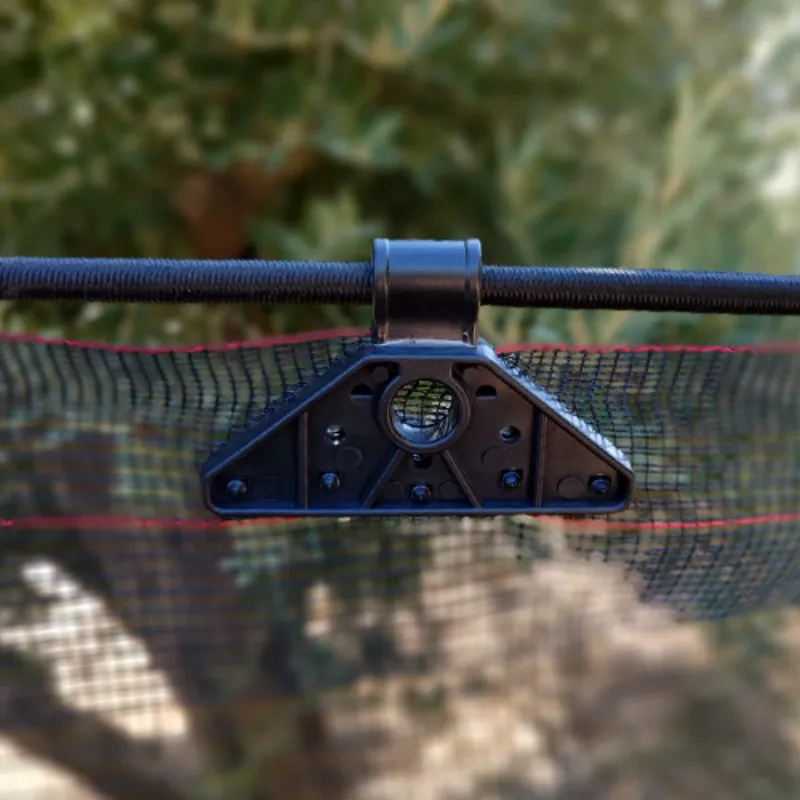
Fix the netting to the cables with clips or karabiners every 50 cm. Make sure the netting is taut but with a little slack to absorb gusts.
Clips and karabinersTensioning and anchoring
Tension the cables with double-ring tensioners. End posts need angled anchor braces or ground guys to withstand the wind load.
Elastic cordSecuring the netting
Secure the netting to the cables and posts with clips or karabiners every 50 cm. Avoid puncturing the netting: perforations weaken the fabric and lead to tears in the wind. Fixing accessories give a firm hold without damaging the net.
Fixing clips and karabinersFixing to wooden posts
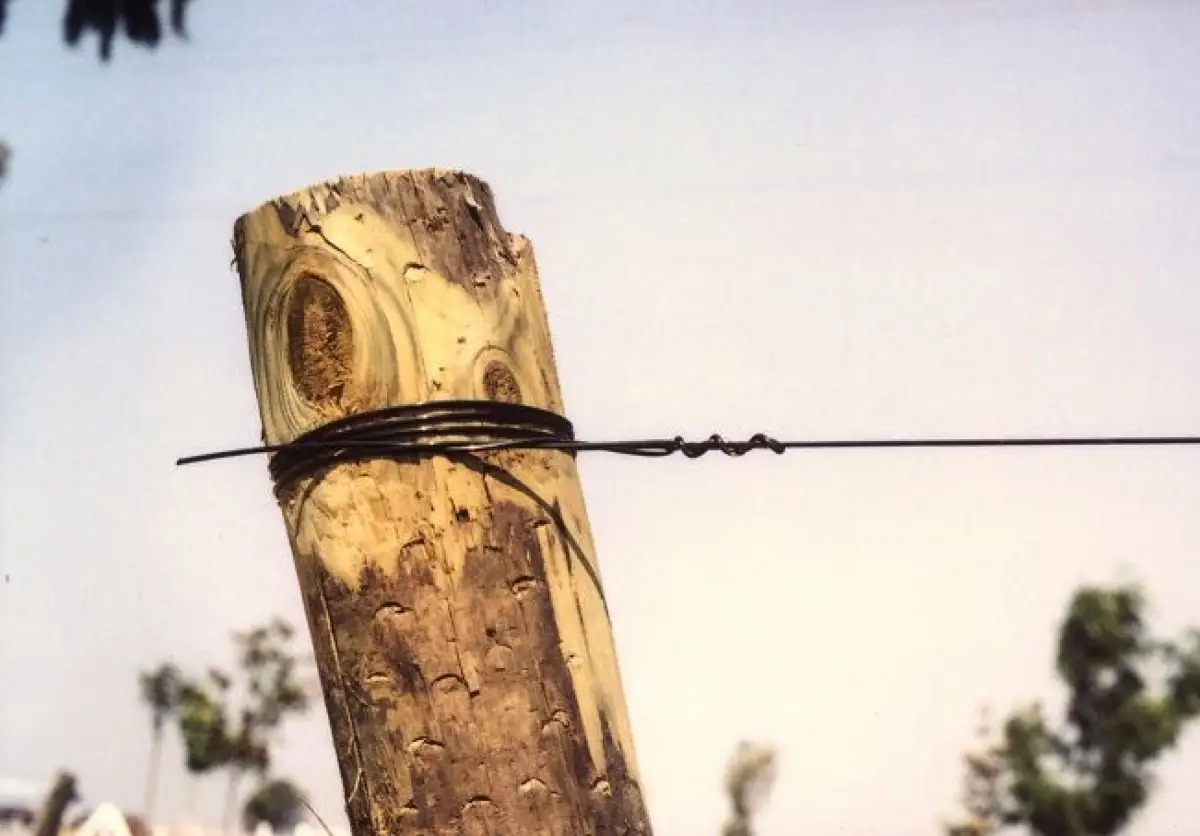
On wooden posts, fix with Agropet® PET monofilament or plastic-coated wire to stop the fabric tearing through direct contact with the post. Agropet® does not cut the fabric, does not rust and lasts longer than conventional wire.
Agropet®Wind protection formula
A windbreak net with 50% porosity protects a distance of 8 to 15 times its height downwind. Example: a 4 m high net protects up to 60 m of crop. Nets with porosity above 90% generate turbulence and are not recommended.
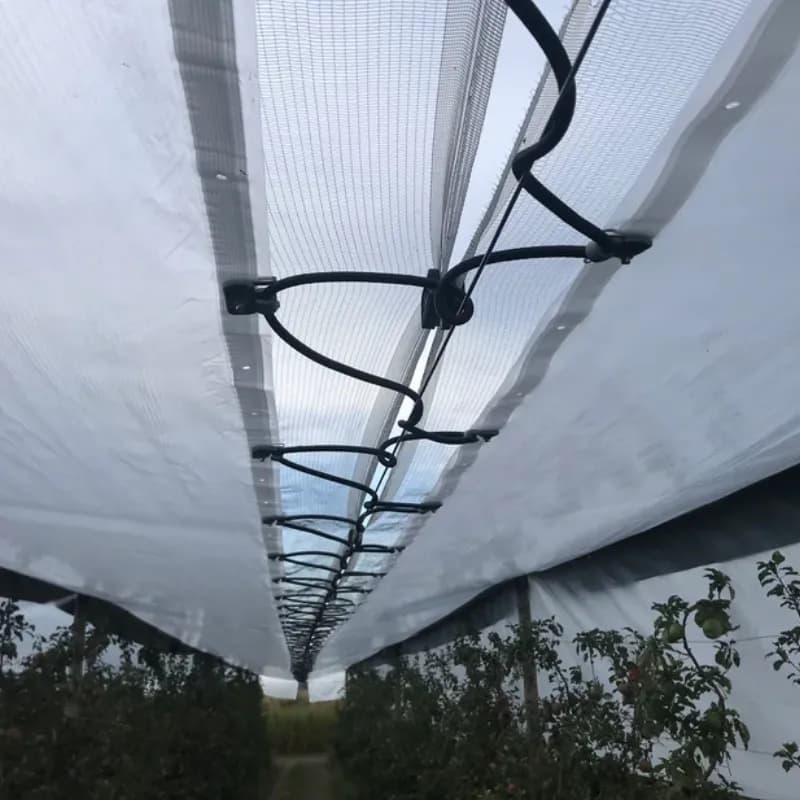
Agricultural windbreak netting: crops protected against wind
Banana
La platanera es extremadamente sensible al viento. Las mallas cortavientos son imprescindibles en plantaciones expuestas a vientos fuertes.
Avocado
Avocado plantations in coastal areas suffer warm, gusty winds that damage leaves and fruit. Windbreak netting reduces water stress and protects the crop.
Citrus
Oranges, lemons and mandarins in coastal Mediterranean areas. Compatible with weed control fabric and shade netting for complete protection.
Intensive horticulture
Lettuce, tomatoes and vegetables in open field in windy areas.
Tropical crops
Mango, papaya y chirimoya en la costa subtropical.
Berries
Blueberries, raspberries and blackberries in tunnels and open field.
Kiwi
Kiwi is extremely sensitive to wind: gusts over 30 km/h break branches and damage young shoots. Windbreak netting is essential in most plantations.
Wind: invisible damage and silent loss
Excessive wind (>30 km/h sustained) causes water stress through accelerated evapotranspiration, premature drop of flowers and fruit, mechanical damage to leaves and branches, and soil erosion.
Coastal areas, funnelled valleys and exposed regions suffer persistent winds that reduce yields by 15% to 40% without a protective barrier.
Without windbreak protection, chronic wind reduces yields by up to 40% in sensitive crops.
Frequently asked questions about agricultural windbreak netting
What is windbreak netting used for?
Windbreak netting reduces wind speed by 50-70% without creating turbulence on the leeward side. It protects crops from dehydration, fruit drop and mechanical damage. The calibrated porosity filters the air gradually, protecting an area of 8-15 times the height of the net.
How do you install windbreak netting?
Windbreak netting is installed vertically on wooden, steel or concrete posts. It is fixed with staples, clips or perimeter carabiners, without piercing the fabric. Textil Villa de Pego manufactures custom-made with personalised heights. Manufacturer price.
How long does windbreak netting last?
Textil Villa de Pego's windbreak netting incorporates UV stabilisation for maximum outdoor durability. Its service life depends on the accumulated UV radiation in your area and the conditions of use. The leno-woven HDPE resists solar degradation and the mechanical load of continuous wind without deforming. Contact our technical team for an estimate based on your location.
What windbreak percentage do I need?
Sí. Se instala sobre postes de madera, acero galvanizado u hormigón.
Let’s talk about your project
Receive a personalised quote within 24 hours. No obligation.
WWW.TEXTILVPEGO.COM
FABRICANTES DESDE 1949