
MALLAOCULTACIÓN
Screening netting for privacy and visual screening
Visually demarcate your farm, construction site or perimeter with high-durability HDPE netting. Screening percentages from 50% to 95%. Same leno quality as our shade netting, installed vertically.
EU
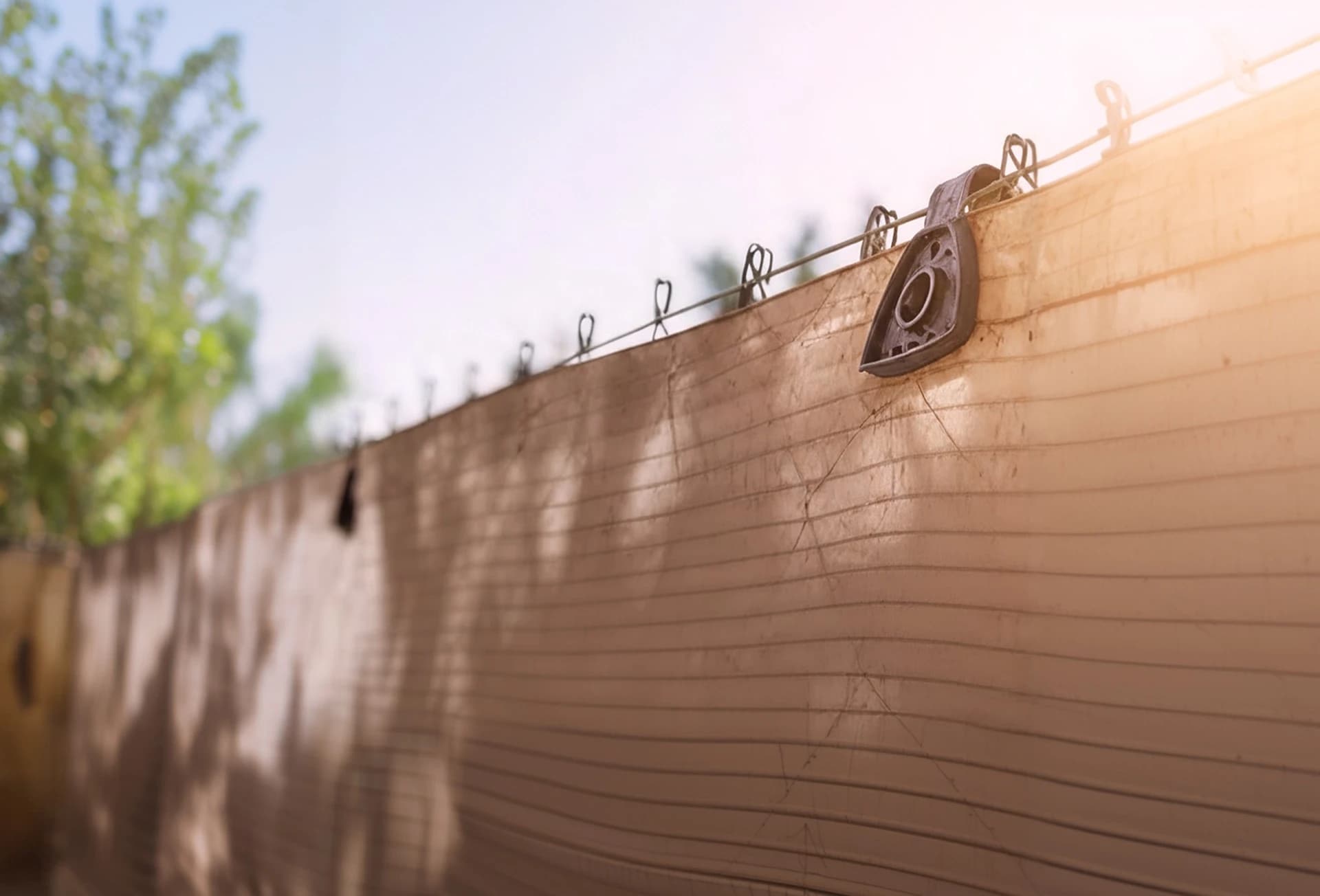
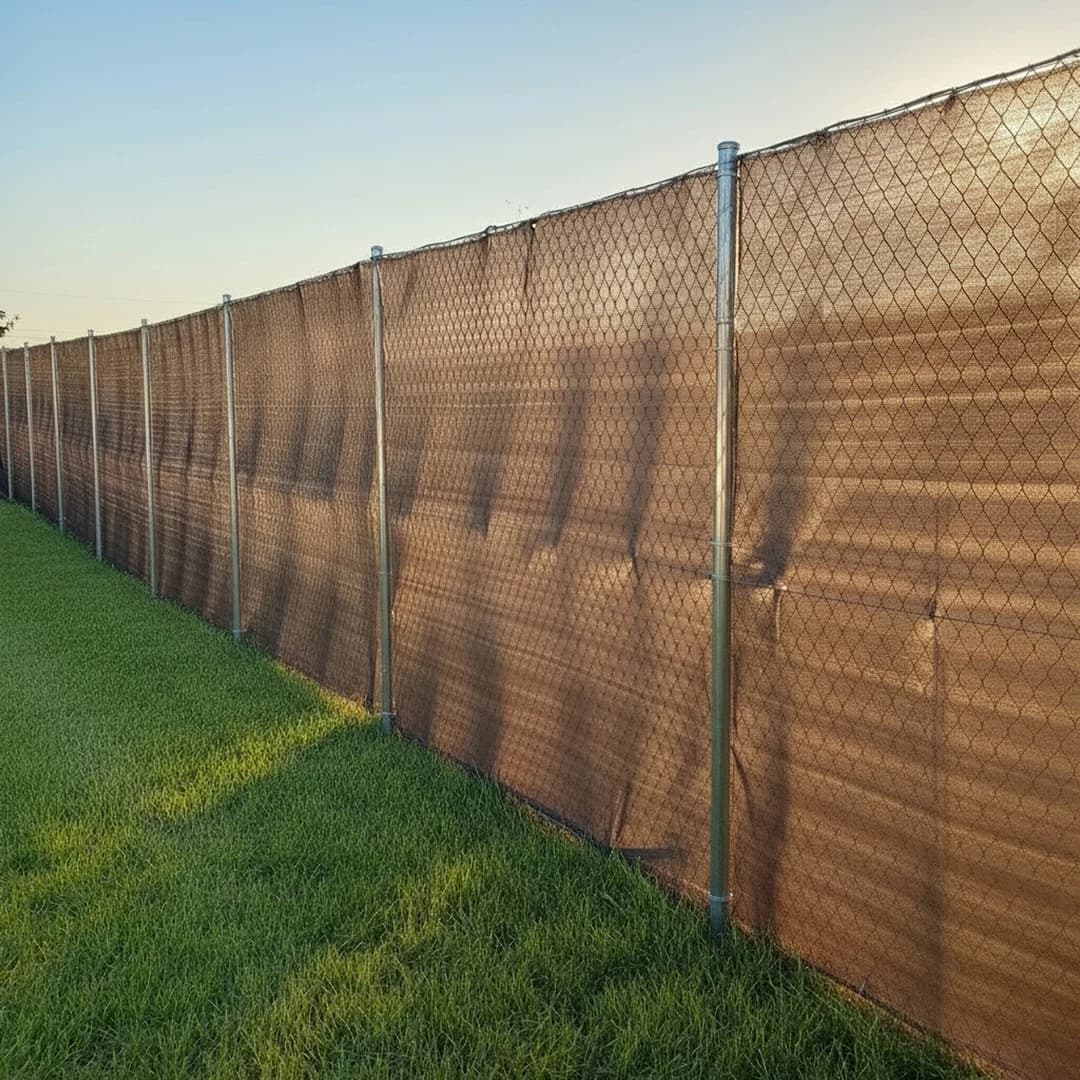
How to fit privacy screen mesh to a fence: leno screening with natural ventilation
HDPE leno-woven netting providing visual privacy without blocking air circulation. Vertical installation on existing fencing.
Benefits of
HDPE leno privacy screen mesh
Calibrated visual privacy
calibrated (90-95%)
Screening percentages from 50% to 95%. Select the appropriate privacy level for your application without completely sacrificing transparency.
Partial wind protection
against wind
Screening netting acts as a partial windbreak, reducing wind speed without generating the leeward turbulence a solid wall would create.
Natural ventilation preserved
preserved
Unlike opaque panels, the leno structure allows natural air circulation, avoiding condensation and overheating issues.
Quick and lightweight installation
and lightweight
Fixed directly onto existing fencing with cable ties or wire. No separate structure required. Reduced weight compared to rigid alternatives.
Three standard colours
standard
Green (landscape integration), brown (rural plots) and black (industrial and construction use). Other colours on request.
UV stabilisation
verified UV
HDPE stabilised against UV radiation for maximum outdoor durability. Estimated service life of 5 to 8 years.
Ideal for organic farming
organic farming
100% physical protection with no chemical residues. Compatible with certified organic farming operations and integrated production protocols.
Related products for privacy screen mesh
Complete the installation of your HDPE leno privacy screening with Textil Villa de Pego fixing clips, compatible with any fence or perimeter cable.
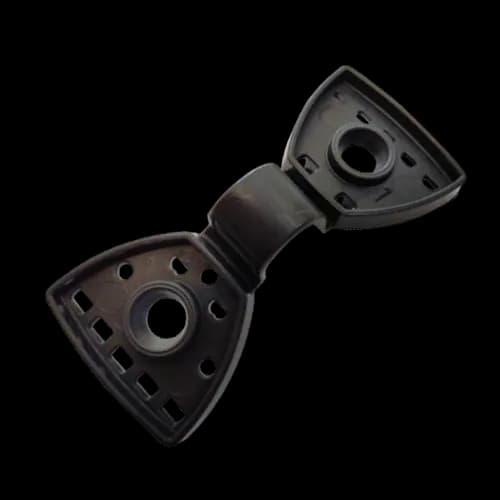
Valiente clip (for privacy screen mesh)
10 anchor points for a reinforced hold. Tool-free click system. Ideal for fixing privacy screening to perimeter cable or wire.
View the Valiente clip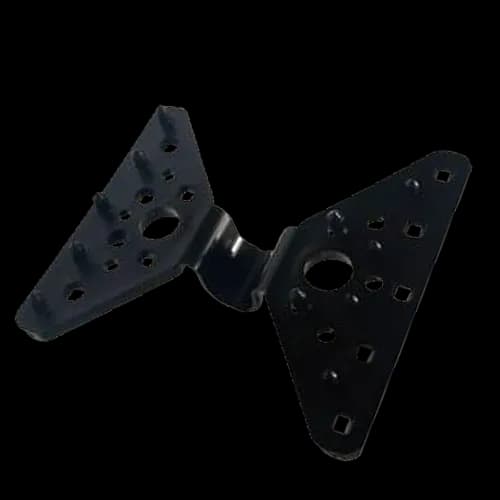
Adro clip (for privacy screen mesh)
11 anchor points with a tool-free click-tip system. A wrap-around hold, perfect for lightweight privacy screening.
View the Adro clipApplications of screening netting
Textil Villa de Pego screening netting adapts to any visual privacy and perimeter demarcation need.
Agricultural perimeters
Visual demarcation of farms, livestock facilities and open-air storage. Operational privacy without sacrificing ventilation.
Nurseries and garden centres
Perimeter screening for commercial nurseries. Protects exposed plants from wind and provides stock privacy.
Construction sites
Screening netting on perimeter site fencing. Visual regulatory compliance in urban areas. Partial dust retention.
Events and temporary spaces
Visual screening for outdoor events, agricultural fairs and demarcation of restricted access zones.
Sports facilities
Perimeter screening for training grounds, sports courts and outdoor leisure spaces.
Residential
Privacy for gardens, terraces and residential plots. Landscape integration with green and brown colours.
A different application? Tell us about your project
Request a quoteLeno netting vs raschel netting:
technical comparison
Textil Villa de Pego weaves its privacy screen mesh exclusively with leno fabric. This table summarises the key differences versus knitted raschel fabric in screening and privacy applications.
Screening capability
Leno
Calibrated visual screening from 90 to 95% with ventilation preserved
Raschel
Less uniform screening — open loops reduce the real screening level
Stability under UV radiation
Leno
UV-stabilised HDPE — significantly higher outdoor resistance
Raschel
Poorer UV stabilisation — premature colour loss and stiffening
Tear and wind resistance
Leno
High — the mechanical twist stops damage spreading if a thread breaks
Raschel
Low — tends to ladder like a stocking under tension or tearing
Durability in vertical installation
Leno
Significantly better under continuous wind load on fencing
Raschel
Worse — the knit deforms and loses tension over time
Edge and selvedge retention
Leno
Stable reinforced selvedges — takes cable-tie fixing without deforming
Raschel
Unstable edges — the loops give way at fixing points
| Property | Leno weave (Textil Villa de Pego) | Raschel (knitted) fabric |
|---|---|---|
| Screening capability | Calibrated visual screening from 90 to 95% with ventilation preserved | Less uniform screening — open loops reduce the real screening level |
| Stability under UV radiation | UV-stabilised HDPE — significantly higher outdoor resistance | Poorer UV stabilisation — premature colour loss and stiffening |
| Tear and wind resistance | High — the mechanical twist stops damage spreading if a thread breaks | Low — tends to ladder like a stocking under tension or tearing |
| Durability in vertical installation | Significantly better under continuous wind load on fencing | Worse — the knit deforms and loses tension over time |
| Edge and selvedge retention | Stable reinforced selvedges — takes cable-tie fixing without deforming | Unstable edges — the loops give way at fixing points |
The twisted leno weave is Textil Villa de Pego's technical differentiator versus the market's standard raschel offering.
Technical specifications
Material
High-density polyethylene (HDPE)
Weave
leno (same material as shade netting)
Screening percentage
50%, 70%, 80%, 90%, 95%
Available colours
Green, brown, black
Installation
Vertical on existing fencing (cable ties, wire or clips)
UV stabilisation
Yes — estimated service life 5–8 years
Fabrication
Standard rolls and custom cut-to-size. Optional perimeter reinforcements.
| Property | Value |
|---|---|
| Material | High-density polyethylene (HDPE) |
| Weave | leno (same material as shade netting) |
| Screening percentage | 50%, 70%, 80%, 90%, 95% |
| Available colours | Green, brown, black |
| Installation | Vertical on existing fencing (cable ties, wire or clips) |
| UV stabilisation | Yes — estimated service life 5–8 years |
| Fabrication | Standard rolls and custom cut-to-size. Optional perimeter reinforcements. |
Specifications shown are indicative. Refer to the product data sheet for definitive figures.
Values shown are indicative and subject to manufacturing tolerances (±5% dimensional, ±10% mechanical). Data does not constitute contractual specifications.
Available colors
You need visual screening without sacrificing ventilation
Farms, construction sites and industrial perimeters require visual demarcation for security, operational privacy and regulatory compliance. A solid barrier (wall, opaque panel) blocks ventilation and generates leeward turbulence.
HDPE screening netting filters the view without blocking airflow, combining privacy with natural ventilation. It is more economical, faster to install and lighter than any rigid alternative.
Frequently asked questions about screening netting
What is the difference between screening netting and shade netting?
It is the same HDPE leno material. The difference is the installation orientation: horizontal for shade (over crops), vertical for screening (on fencing). The available percentages and colours are the same.
What screening percentage do I need?
For complete privacy: 90–95%. For partial screening with ventilation: 50–70%. For construction sites, a minimum of 80% is recommended for visual regulatory compliance.
Does screening netting withstand wind?
Yes. The leno structure allows wind to pass partially through the netting, reducing wind load. It is more wind-resistant than a solid barrier because it filters the flow rather than blocking it.
Can it be installed on chain-link fencing?
Yes. Screening netting is fixed with plastic cable ties or wire directly onto existing fencing, whether chain-link, rigid panel or metal posts.
How long does screening netting last?
With UV stabilisation, HDPE screening netting has an estimated service life of 5 to 8 years under continuous direct solar exposure conditions.
Are they custom-made?
Yes. Textil Villa de Pego manufactures screening netting with custom dimensions and perimeter reinforcements. Quote within 48 working hours.
How do you install privacy screen mesh step by step?
Unroll the mesh along the fence, align the top edge at the desired height and fix with cable ties every 30-50 cm around the whole perimeter. Tension progressively as you go to avoid pockets. Finish corners with reinforced ties. One person can install 30-40 m in a day.
What advantage does leno have over raschel for screening?
Leno fabric interlocks the threads with a mechanical twist at every crossing, blocking the spread of damage if a thread breaks. Raschel, being knitted, ladders completely. Textil Villa de Pego weaves exclusively with leno: a significantly longer life in continuous outdoor exposure.
What wind load can privacy screen mesh withstand?
The load depends on the screening percentage, the fabric weight and how the supporting fence is fixed. At 90-95%, the mesh transfers part of the wind thrust to the existing fence, so the critical point is usually the structure it is fixed to, not the mesh. Ask our technical team about areas with strong winds.
What ties or fittings do I need to install the mesh?
UV-resistant plastic cable ties of 200-300 mm for standard fixing, galvanised wire for permanent installation on industrial fencing, and tensioning clips on the perimeter edges of long runs. Textil Villa de Pego can supply the mesh with integrated perimeter reinforcements to make mechanical anchoring easier.
More questions? Get in touch — no obligation
Request a quoteLet’s talk about your project
Receive a personalised quote within 24 hours. No obligation.
WWW.TEXTILVPEGO.COM
FABRICANTES DESDE 1949