

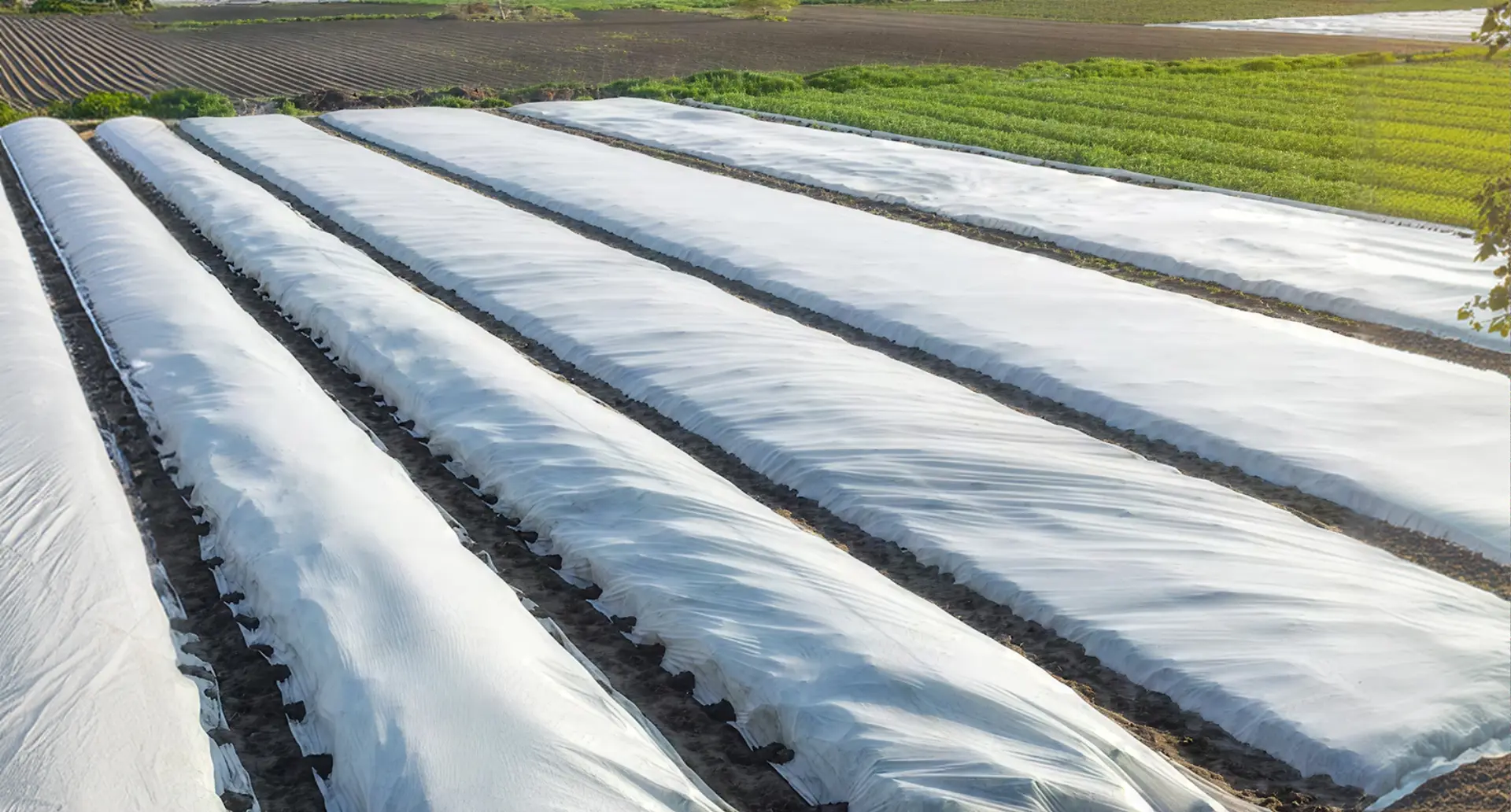

Agricultural Thermal Blanket
Protect vegetables, strawberries and fruit trees from late frosts without costly active systems. TNT horticultural fleece - a row cover / frost cloth made in Spain that brings the harvest forward.



EU
Anti-frost horticultural fleece: +2-4 °C of passive protection
Textil Villa de Pego horticultural fleece is a non-woven polypropylene (TNT) fabric that creates a protective microclimate over the crop. It provides +2 to +4 °C of frost protection relative to the outside temperature, with no need for additional energy or water.
Permeable to water and air. Lightweight (17-30 g/m²). As well as protecting against frost, the anti-frost horticultural fleece speeds up germination and allows the harvest to be brought forward by 2-3 weeks. Stock available plus made-to-order production. Manufacturer prices with fast delivery throughout Spain via our own fleet. Export to any country.

Advantages of Textil Villa de Pego thermal blanket
Protection +2–4 °C
Passive thermal gain of +2 to +4 °C without additional energy or water.
Earlier harvest
Accelerates germination and vegetative development. Allows harvesting 2–3 weeks earlier.
Water permeable
Rainwater passes through the blanket. No need to remove it for irrigation.
Light transmission
Transmits 80–90% of solar radiation.
Passive protection
Requires no energy, water or night-time supervision.
Low cost
Economical solution compared to anti-frost irrigation or paraffin heaters.
Technical specifications
| Property | Value |
|---|---|
| Material | Non-woven polypropylene (TNT / Spunbond) |
| Weight | 17–30 g/m² ±5% |
| Thermal gain | +2 to +4 °C (depending on grammage and conditions) |
| Light transmission | 80–90% |
| Water permeability | Yes — permeable to water and air |
| Vida útil estimada | Multiple seasons — depending on grammage, use and storage |
| Available widths | 1,6 a 15,8 m |
Values shown are indicative and subject to manufacturing tolerances (±5% dimensional, ±10% mechanical). Data does not constitute contractual specifications.
Horticultural fleece: frost-protected crops and applications
Horticulture
Lechugas, espinacas, zanahorias en siembras tempranas.
Strawberry
Protection of strawberry flowers and fruit against spring frosts. The horticultural fleece brings the harvest forward by 2-3 weeks, achieving better market prices.
Early vegetables
Courgette, melon, watermelon and cucumber in early sowings.
Saplings and young fruit trees
Protection for young citrus, avocado, almond and cherry trees during their first winters. Removed once the tree has acclimatised (2-3 years).
Early potatoes
Protects early potato plantings against spring frosts. Brings the harvest forward and secures better market returns.
Nurseries
Protection of seedlings and cuttings in open-air nurseries. Can be combined with shade netting for complete thermal control throughout the year.
Floriculture
Protection of flower and ornamental crops sensitive to cold. Also raspberries and blueberries in early sowings.
Double roof in greenhouses
Installed as a second inner roof in the greenhouse, horticultural fleece creates an insulating air chamber that reduces radiative heat loss on cold nights. A cost-effective alternative to heating.
Turf and sports pitches
Protects turf on football pitches, golf courses and landscaped areas against winter frosts. Spread over the grass at night and removed during the day. Prevents cold burn and keeps pitches playable.
Frost: the silent risk at the start and end of the season
Late spring frosts and early autumn frosts cause devastating damage to horticultural crops, strawberries, fruit tree seedlings and nursery plants.
Climate change has increased thermal variability. Active systems (sprinkler irrigation, heaters) consume enormous amounts of water and energy.
A single late frost can wipe out the entire investment made in sowing, planting and crop care.
Frequently asked questions about horticultural fleece
How many degrees of protection does horticultural fleece provide?
Horticultural fleece provides a thermal gain of +2 to +4 °C depending on the grammage (17 or 30 g/m²). It is effective against radiation frosts (clear, cold nights) but not against advection frosts (moving masses of cold air). The protection is passive and requires no energy.
Do you have to remove the horticultural fleece to water the crop?
No. La manta de TNT es permeable al agua.
How many seasons does horticultural fleece last?
Durability depends on the weight, handling and conditions of use. Higher weights (30 g/m²) offer greater resistance than lighter ones (17 g/m²). Storing it dry and protected from direct sunlight extends its service life. A manufacturer's price that pays for itself from the very first season.
Does the horticultural fleece also protect against pests?
Partially. The horticultural fleece creates a barrier against large insects (butterflies, beetles), but it is not effective against thrips or whitefly because of its open TNT structure. If you need insect exclusion, see our insect mesh netting.
Is horticultural fleece compatible with organic farming?
Yes. Non-woven polypropylene horticultural fleece is a passive, 100% physical protection method with no chemicals involved. It is compatible with organic farming certification and integrated production protocols. A sustainable alternative to active frost protection systems.
Let’s talk about your project
Receive a personalised quote within 24 hours. No obligation.
WWW.TEXTILVPEGO.COM
FABRICANTES DESDE 1949