


MALLAMIXTA
Mixed Mesh for Greenhouses
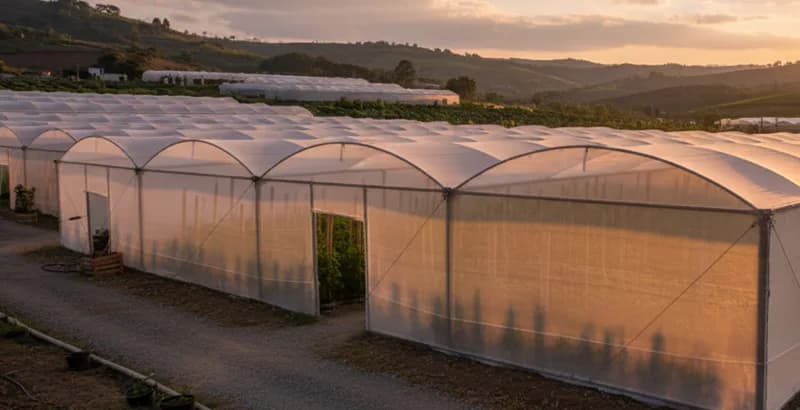
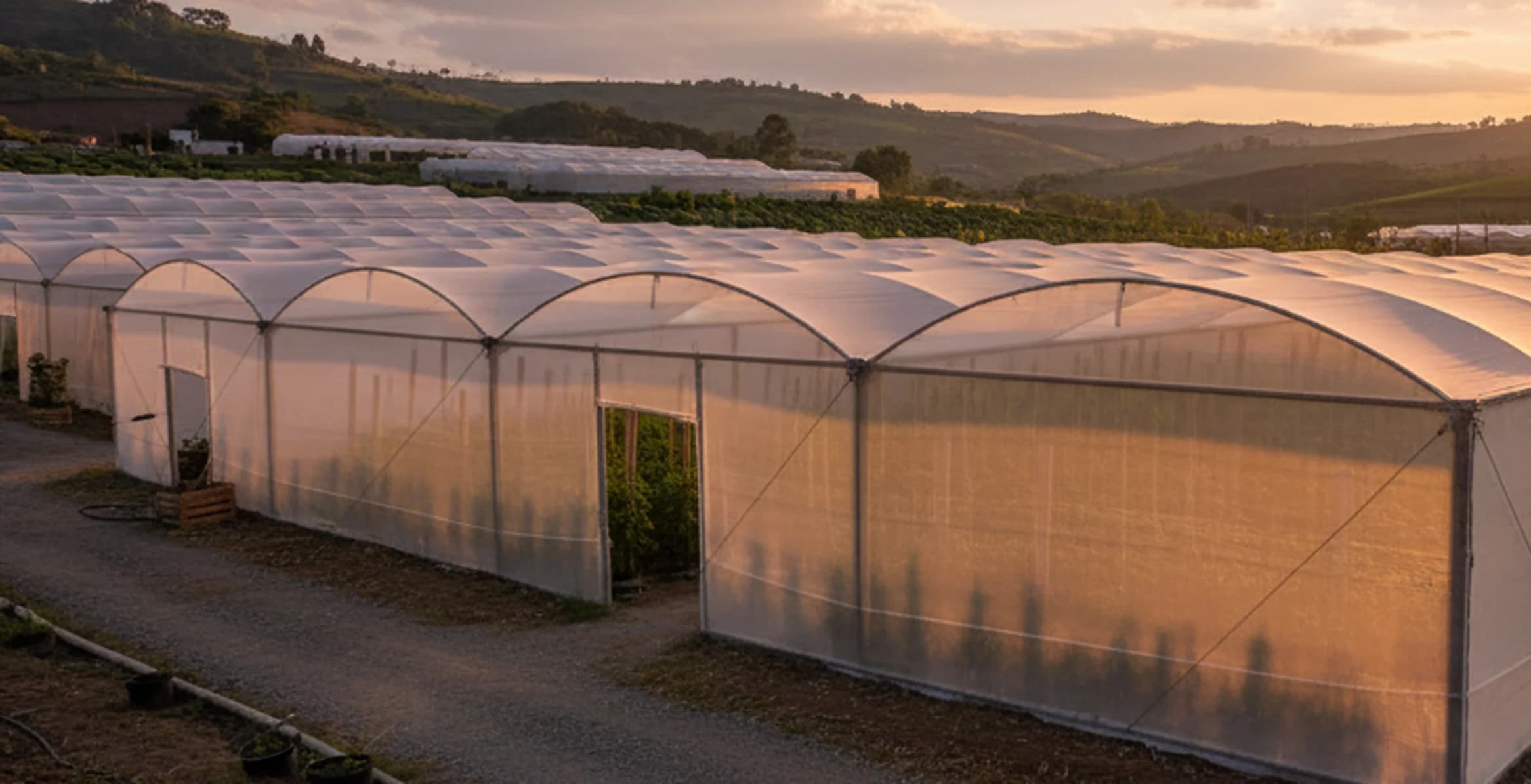
Lateral enclosure and greenhouse covering with HDPE monofilament + rafia woven mesh. Insect barrier, 20% shading, windbreak and longer lifespan than conventional plastic.


EU
How HDPE mixed mesh works as greenhouse side netting
Textil Villa de Pego mixed mesh combines monofilament and rafia threads in a 9x6 structure that protects crops from insects, wind and excess sun while allowing natural greenhouse ventilation.
One single mesh,
three types of crop protection
Insect barrier
The 9x6 thread mesh with rafia prevents insect entry into the greenhouse, reducing the need for phytosanitary treatments and protecting crops from pests.
20% shading
Filters approximately 20% of direct solar radiation, reducing heat stress on crops without compromising photosynthetically active light.
Effective windbreak
Reduces wind speed inside the greenhouse, protecting delicate plants and growing structures without completely blocking air circulation.
Increases daytime temperature
The mesh structure creates a controlled greenhouse effect, raising interior temperature during the day for optimal crop development.
Reduces evapotranspiration
By moderating wind and direct radiation, it reduces water loss through soil evaporation and plant transpiration, optimising water consumption.
Greater durability than plastic
UV-stabilised HDPE fabric resists better than conventional plastic film, with a longer lifespan and without the tearing and degradation issues of plastic.
Ideal for organic farming
100% physical protection with no chemical residues. Compatible with certified organic farming operations and integrated production protocols.
Technical specifications
| Property | Value |
|---|---|
| Material | HDPE (monofilament + woven rafia) |
| Mesh structure | 9x6 threads with rafia |
| Shading | 20% |
| UV stabilisation | Yes — protection against solar degradation |
| Available colours | Crystal (transparent), Black |
| Available widths | Seamless up to 5 metres. Custom widths on request. |
| Fabrication | Standard rolls and custom cut to greenhouse dimensions. |
Specifications shown are indicative. Please consult the product data sheet for definitive data.
Values shown are indicative and subject to manufacturing tolerances (±5% dimensional, ±10% mechanical). Data does not constitute contractual specifications.
Available colors
Mixed mesh applications
Versatile solution for greenhouse enclosures and protected cultivation structures.
Lateral enclosures
Enclosure of greenhouse sides for insect and wind protection, while maintaining natural ventilation through the woven structure.
Crop tunnels
Covering for low tunnels and macro-tunnels for early horticultural crop protection. A durable alternative to plastic film.
Nurseries
Protection of seedlings and cuttings in nurseries from insects, excessive wind and direct solar radiation during the growing phase.
Citrus greenhouses
Enclosure of structures for protected citrus production. Insect barrier compatible with integrated production.
Protected horticulture
Greenhouse covering for tomato, pepper, cucumber and high-value vegetable cultivation in a controlled environment.
Ornamental cultivation
Protection of ornamental plants and flowers in greenhouses. Light and temperature control for quality production.
Medicinal cannabis
Mixed mesh in medicinal cannabis greenhouses combines insect barrier with light shading and wind protection, creating a controlled growing environment.
Berries
Enclosure of blueberry, raspberry and strawberry tunnels. Insect and wind protection with natural ventilation.
Frequently asked questions about mixed mesh
What is the difference between mixed mesh and mosquito netting?
Mixed mesh combines monofilament threads with rafia, giving it greater mechanical resistance and a slight shading effect (20%). Mosquito netting is exclusively fine monofilament, designed for maximum ventilation and insect barrier without significant shading.
What is the maximum seamless width available?
Textil Villa de Pego manufactures seamless mixed mesh up to 5 metres wide. For greater widths, panels are joined using reinforced industrial stitching. Consult availability of special sizes.
How long does mixed mesh last in a greenhouse?
With built-in UV stabilisation, Textil Villa de Pego mixed mesh has a significantly longer lifespan than conventional plastic. Durability depends on solar exposure and local climatic conditions.
Is it suitable for strong wind areas?
Yes. The combination of monofilament and rafia provides superior mechanical resistance compared to pure monofilament meshes. It acts as an effective windbreak reducing wind speed without creating turbulence.
Can it be installed as a greenhouse roof covering?
Yes. Mixed mesh is used for both lateral enclosures and roof covering in parral or multi-tunnel greenhouses. The woven structure supports its own weight and resists wind loads.
How long does mixed mesh last and how is it maintained?
Textil Villa de Pego mixed mesh is UV-stabilised for a long outdoor service life, depending on the accumulated solar radiation and wind load in each area. Maintenance is minimal: check the fixing points periodically after strong winds, clean with low-pressure water if dust builds up, and repair localised tears with stitching or clips before they spread.
How is mixed mesh fixed to the greenhouse structure?
Mixed mesh is fixed to the structure with locking or Adro-type clips, karabiners or elastic cord, depending on the geometry of the greenhouse. For large roof areas, tensioned panels with a perimeter cable are recommended. See the accessories section or ask the Textil Villa de Pego team for technical advice.
Let’s talk about your project
Receive a personalised quote within 24 hours. No obligation.
WWW.TEXTILVPEGO.COM
FABRICANTES DESDE 1949