

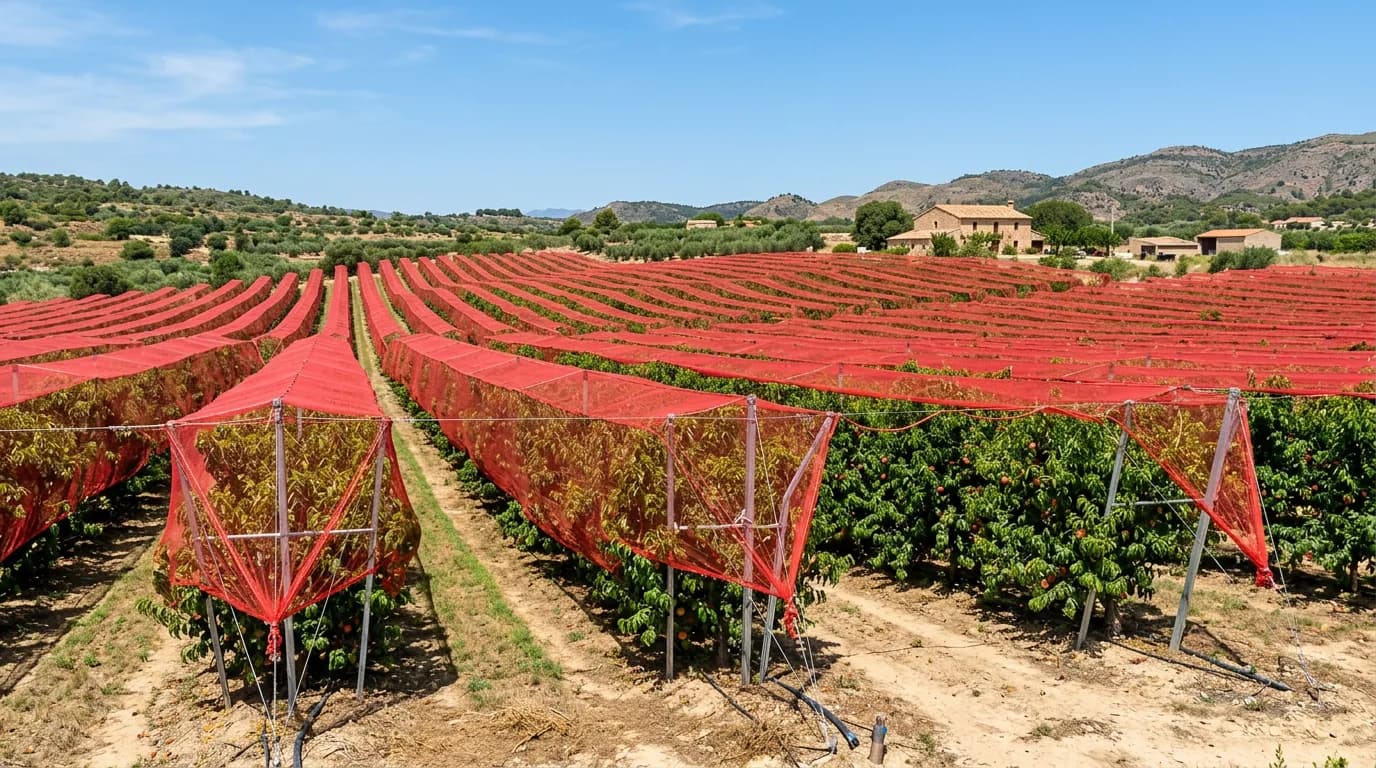
The colour of an insect net is not just a matter of aesthetics. Recent research shows that it directly influences how well the net keeps pests away from the crop.
The finding is clear: red netting repels insect pests more effectively than white or black netting, even when its mesh size (hole size) is larger.
Why red is almost invisible to insects
The key lies in so-called 'optical pest control', based on how insects see. As Professor Masami Shimoda explains, most insects lack red photoreceptors in their eyes and find that colour very hard to perceive.
To the pest, a red net is practically invisible: it neither recognises it as a barrier nor finds the gaps to slip through. Rather than repelling by physical blockage, red visually disorients the insect.
The case of thrips, a highly resistant pest
The study focused on onion thrips (Thrips tabaci), an insect highly resistant to insecticides that causes serious damage to a wide range of crops worldwide.
The results, published in Scientific Reports by the Kyoto Prefecture Agriculture Centre and the University of Tokyo, were conclusive: plots with full red cover needed between 25% and 50% fewer insecticide applications than uncovered plots.
What this means for your farm
Beyond reducing chemical treatments, red netting is a reusable investment that lasts for years. Because it allows a larger mesh size, it improves breathability and airflow under the structure, which lowers humidity, fungal growth and temperature extremes, as well as improving working conditions.
At Textil Villa de Pego we manufacture insect netting — including our anti-thrips netting — in red too, adapting mesh size and dimensions to each crop. Ask our team about the best option for your farm.