

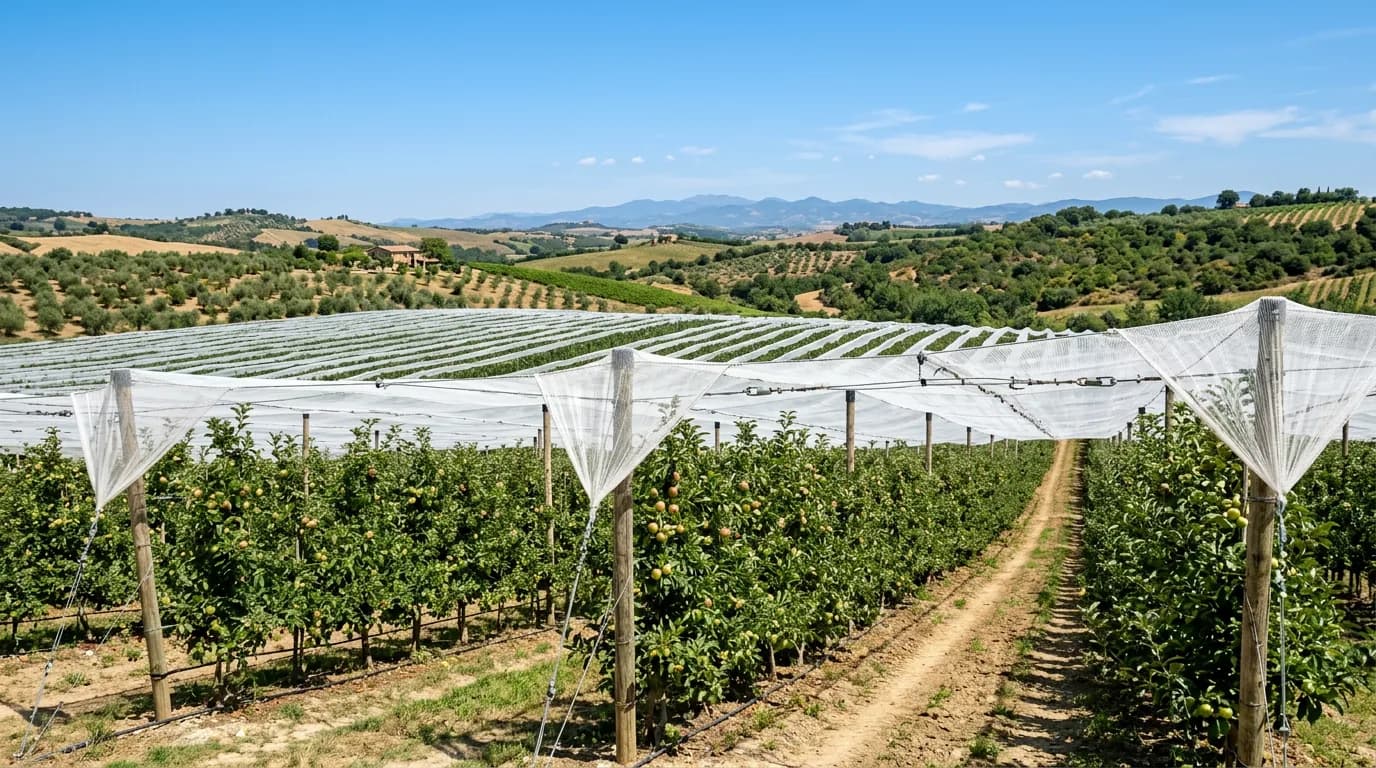


Hail is one of the most devastating weather threats to agriculture. A single event lasting just 15 minutes can destroy an entire harvest, causing economic losses that take seasons to recover from.
In this guide we analyse the key factors to consider before investing in hail protection: from material selection and mesh density to support structures and periodic maintenance.
Available materials and densities
Modern anti-hail nets are manufactured primarily from high-density polyethylene (HDPE) with UV stabilisation. Common densities range from 30 to 55 g/m², and the choice depends on the predominant hailstone calibre in your area.
Heavier meshes offer protection against larger hailstones but also reduce light transmission. The balance between protection and light is a determining factor.
Installation systems
There are two main installation families: the flat system (pergola type) and the inverted-V system (cherry type). The flat system is more economical and suitable for low-growing crops.
The support structure can be built with wooden, concrete or galvanised steel posts. Each material has advantages in durability, cost and ease of assembly.
Maintenance and service life
With proper maintenance, a quality anti-hail net can achieve a service life of 8 to 12 years. Annual inspections should check the condition of seams and anchor points.
Textil Villa de Pego offers technical advisory services for sizing and maintaining anti-hail installations across all types of agricultural operations.