

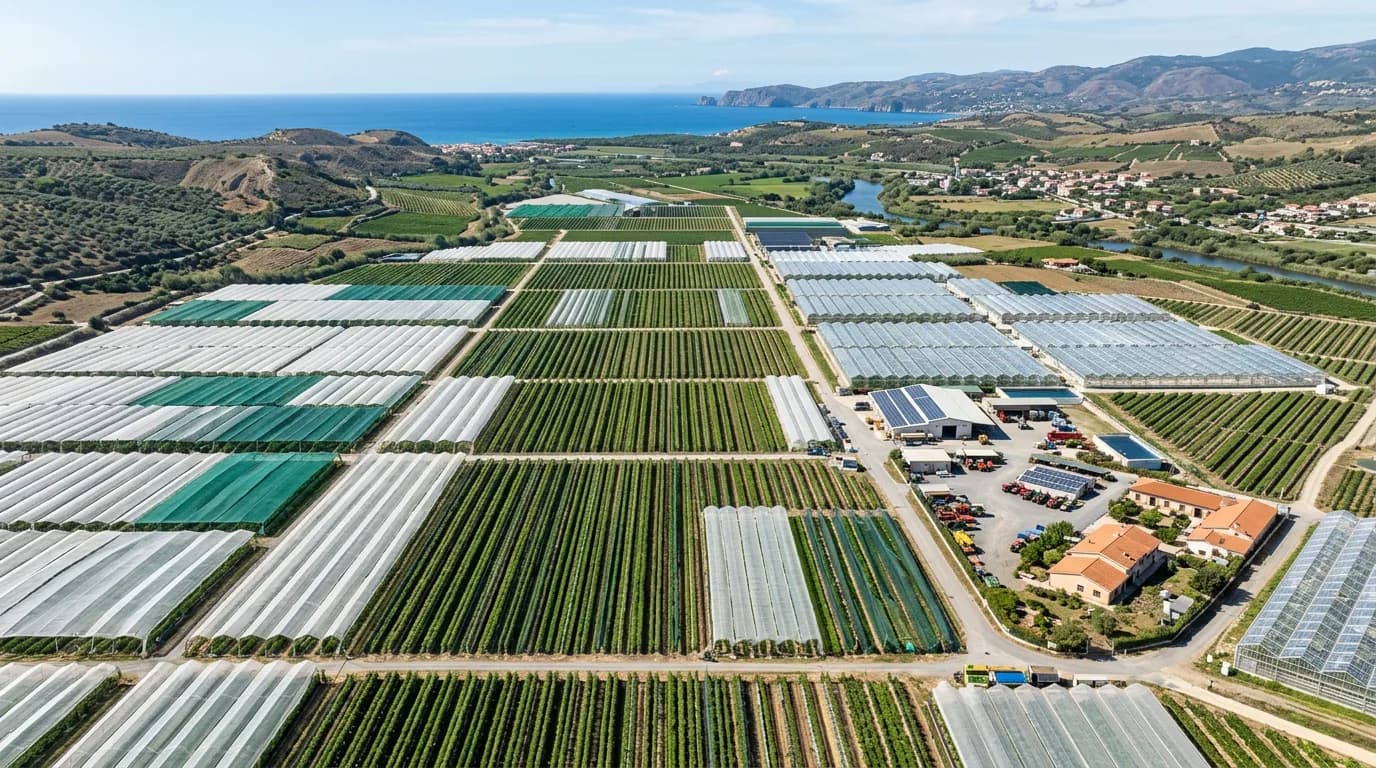


The agrotextile sector is undergoing a profound transformation driven by European environmental regulation, agricultural digitalisation and the demand for more sustainable solutions.
In this analysis we identify the four trends redefining the agrotextile industry in 2026 and their implications for manufacturers and users.
Recycled materials and circular economy
Regulatory pressure from the European Green Deal is accelerating the incorporation of recycled polymers into the manufacture of agricultural meshes and nets.
Textil Villa de Pego invests in research into post-consumer recycled polymers that maintain the mechanical properties and UV resistance required for long-lasting agricultural applications.
Smart textiles with IoT sensors
The integration of temperature, humidity and solar radiation sensors into agrotextile fabrics enables real-time monitoring of crop conditions.
Although still in the commercial development phase, smart mesh prototypes demonstrate the potential of combining physical protection with agronomic data generation.
Installation automation
Mechanised mesh deployment and tensioning systems reduce installation time by up to 60% compared to traditional manual methods.
The trend towards lighter meshes, such as those made with Textil Villa de Pego Agropet®, facilitates the adoption of these automated systems on operations of all sizes.